
International Coalition
Against Modern Slavery
- Modern Slavery Watch
- …
- Modern Slavery Watch
International Coalition
Against Modern Slavery
- Modern Slavery Watch
- …
- Modern Slavery Watch
International Coalition
Against Modern Slavery
Climate Change, Forced Displacement, and Modern Slavery
By 2050, more than 143 million people in sub-Saharan Africa, South Asia, and Latin America will be forcibly displaced from their home due to natural disasters exacerbated by climate change. The climate crisis heightens the risks of modern slavery, as climate-driven disasters destroy livelihoods and homes. This leaves communities vulnerable to human trafficking, debt bondage, forced labour, early marriage, sexual exploitation, and other forms of modern slavery.
The climate crisis and modern slavery remain deeply tied to imperialism. The world’s 20 wealthiest countries drive global emissions, while simultaneously importing hundreds of billions of dollars worth of goods made by forced labor each year.
- Bangladesh: Considered one of the world’s most climate vulnerable countries, with a reported estimate of over 1 million people living in modern slavery in 2023 - widowed women were targeted by traffickers and driven into prostitution and hard labour after cyclone Sidr in 2007.
- Pakistan: Monsoons and superfloods destroy crops and arable land threatening farmers livelihoods and forcing them in a cycle of debt, risk of imprisonment where they were forced to do unpaid labor, and give away their land pushing them to displacement, risky employment, and preyed on by traffickers.
- Philippines: In the immediate aftermath of Super Typhoon Rai in 2021, modern slavery risk increased and exacerbated vulnerabilities for indigenous population.
- Horn of Africa: Drought affected areas saw increases in child marriages, economic and food insecurity, and displacement
- Central America: Rising global temperatures, increases in the rates of crops disease, and extreme weather events are threatening livelihoods of those depending on agriculture forcing them to migrate from the region
These are only some cases of natural disasters exacerbated by climate change and its link to modern forms of slavery. Without action from states and intergovernmental organizations, this deep link between climate induced displacement and modern forms of slavery will persist and continue to impact the well being and human rights of individuals around the world.
Climate Mobility Community Action Network and the International Coalition Against Modern Slavery will be working on a joint educational campaign on the intersection of climate linked displacement and modern forms of slavery, advocate for systemic change and protection for those migrating, and spotlight the impacts on communities around the world.
Join us at our upcoming Guest Speaker Session!
Learn more about the intersection of climate displacement and modern slavery
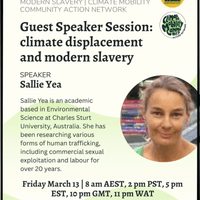


Learn more about the intersection of climate induced
displacement and modern slavery
- https://www.antislavery.org/wp-content/uploads/2021/09/ClimateMigrationReportSep2021_low_res.pdf
- https://www.walkfree.org/global-slavery-index/findings/spotlights/the-costs-of-the-climate-crisis/
- https://www.iied.org/sites/default/files/pdfs/2025-02/22604iied.pdf
- https://www.theguardian.com/global-development/2021/sep/20/climate-crisis-leaving-millions-at-risk-of-trafficking-and-slavery
Take Action
Join our fight and sign the letter here: https://docs.google.com/document/d/1XNT1b-s3ujL9xNLx7IY7r74yfYcWkQc4pdAS3bx6DPY/edit?usp=sharing


International Coalition Against Modern Slavery